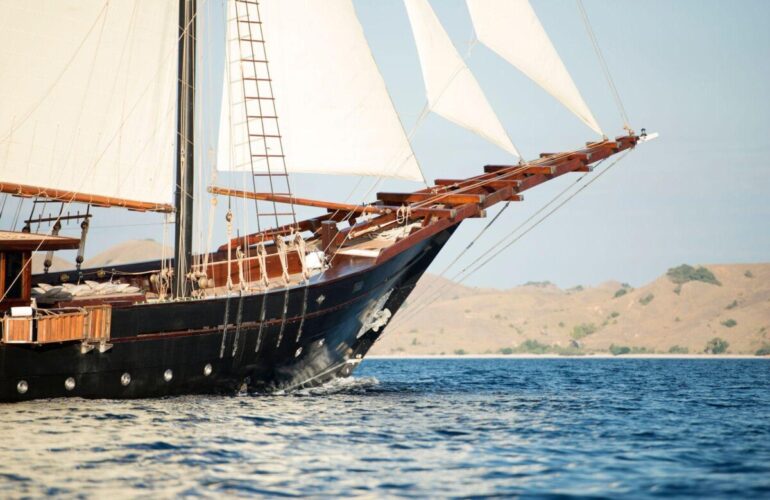
A Komodo liveaboard is the single best way to experience one of the most biodiverse marine parks on the planet. Stretching across 1,817 square kilometres of open water, volcanic islands, and protected reef systems in eastern Indonesia, Komodo National Park demands more than a day trip; it rewards those who sleep on the water, wake to new anchorages, and dive site after site without rushing back to shore. Whether you are drawn to encounters with Komodo dragons, world-class wall dives, or the stark beauty of savannah-covered islands rising from indigo seas, a liveaboard voyage from Labuan Bajo puts the entire park within reach.
Why a Liveaboard Is the Way to Do Komodo
Komodo National Park spans three major islands Komodo, Rinca, and Padar plus dozens of smaller islets scattered across the Flores Sea. The distances between key sites make land-based day trips impractical for anyone who wants to see more than one or two highlights. A Komodo liveaboard eliminates the back-and-forth, letting you dock at Padar Island for a sunrise trek, anchor at Manta Point by mid-morning, and reach a remote southern dive site by afternoon, all without retracing your route.
The format also solves a practical problem created by the park’s new visitor regulations. Starting in April 2026, the Indonesian government capped daily entries at 1,000 visitors, divided into three timed sessions of roughly 300 visitors each. During peak months like July, when daily footfall previously exceeded 1,700 visitors, that quota will sell out months in advance. Liveaboard operators who pre-register guests through the mandatory SiOra booking system secure those slots early, which is a significant advantage over walk-up arrangements.
The Marine World Below
Komodo National Park sits within the Coral Triangle, the global epicentre of marine biodiversity. The numbers are staggering: more than 1,000 species of tropical fish, 260 species of reef-building coral, 70 sponge varieties, and populations of manta rays, reef sharks, sea turtles, dolphins, and the rare dugong all thriving in nutrient-rich currents where the Indian Ocean and Flores Sea converge. There are over 50 recognised world-class dive sites in the park, ranging from gentle coral gardens suitable for beginners to advanced current dives where pelagic species patrol the blue.
Diving Komodo is unlike diving almost anywhere else in Southeast Asia. The convergence of warm tropical water and cooler upwelling creates conditions where both tropical reef species and temperate-water visitors like whale sharks coexist. Sites like Castle Rock, Crystal Rock, and Batu Bolong are legendary among experienced divers, while calmer spots near Sebayur and Siaba Besar offer excellent Komodo island diving for snorkellers and newer divers. A dedicated Komodo diving liveaboard typically carries full scuba equipment, a resident dive instructor, and kayaks or paddleboards for surface exploration between dives.
What to Expect On Board
Modern Komodo liveaboard vessels are a far cry from basic backpacker boats. Hello Flores, one of the established operators based in Labuan Bajo, curates a fleet that ranges from intimate two-cabin phinisi ships to larger 20-guest vessels with en-suite cabins, air-conditioned salons, and dedicated sundeck lounges. Many boats are built in the traditional phinisi style, double-masted wooden sailing ships originally crafted by Bugis and Makassar shipwrights but fitted with contemporary navigation, safety, and comfort systems.
A typical Komodo cruise runs two to four nights. Shorter itineraries cover the northern circuit (Padar Island, Komodo Island, Manta Point, Pink Beach), while extended voyages push south toward Horseshoe Bay and the current-swept channels favoured by advanced divers. Meals on board are generally full board, with the crew preparing a mix of Indonesian and Western dishes. Most boats carry snorkelling gear, and many include complimentary kayak use.
For travellers weighing a Komodo boat tour against a Komodo island tour or a land-based Labuan Bajo trip, the liveaboard consistently wins out in terms of access and time efficiency. You spend your hours exploring rather than commuting, and your floating accommodation travels with you.
Planning Your Labuan Bajo Trip
Labuan Bajo, the small port town on the western tip of Flores, is the departure point for virtually every Komodo tour. Direct flights connect Labuan Bajo to Bali (90 minutes) and Jakarta, making Komodo island tours from Bali straightforward to arrange. The town itself has grown rapidly, fuelled by Komodo tourism, which drew over 430,000 visitors to the national park in 2025 alone, yet it remains compact enough to navigate on foot.
Most travellers arrive a day early, settle into Labuan Bajo, and board their vessel the following morning. If you are booking an open trip to Labuan Bajo (shared-cabin sailing with other travellers), departures typically run on fixed schedules during peak season (May through October). For those seeking exclusivity, a private trip to Labuan Bajo and the park via a Komodo boat charter gives you full control over the itinerary, pace, and onboard experience.
Pricing varies widely. Budget-friendly Komodo trip options on shared boats start around USD 150–250 per person per night, while a luxury Komodo boat trip on a premium phinisi with private charter rates can run USD 500 or more per person per night. Hello Flores structures its offerings across both tiers, with dedicated support for matching travellers to the right vessel and itinerary.
Beyond the Park: Flores and the Wider Region
A Komodo tour package that extends beyond the national park opens up the broader Flores tour circuit. East of Labuan Bajo, the Trans-Flores Highway winds through volcanic mountains, traditional villages, and the famous tri-coloured crater lakes of Kelimutu. A combined sailing trip and overland Flores extension in Labuan Bajo is one of the most rewarding multi-day journeys in Indonesia.
Within the park, a Labuan Bajo tour typically includes guided treks on Rinca or Komodo Island to observe dragons in the wild, a sunrise hike on Padar for the iconic four-bay panorama, and at least one stop at Pink Beach, one of only a handful of naturally pink-sand beaches on Earth, coloured by microscopic Foraminifera organisms mixed into the sand.
For visitors with more time, a boat charter Komodo itinerary can incorporate southern Komodo sites, the bat colonies of Kalong Island, and extended Komodo diving sessions at remote reefs that day-trippers never reach. A Komodo boat charter of five to seven nights is the sweet spot for divers who want to cover both the northern and southern dive circuits comprehensively.
Best Time to Go
The dry season from May through October offers the calmest seas, clearest visibility, and most comfortable sailing conditions. Water temperatures hover between 27°C and 29°C year-round, but visibility peaks during the dry months at 20–30 metres. July and August are the busiest months, and with the new 1,000-visitor daily cap, booking a Komodo cruise six or more months ahead during peak season is now essential rather than optional.
The shoulder months of April and November can offer excellent conditions with fewer crowds, while the wet season (December through March) brings rougher seas and occasional thunderstorms that limit itinerary flexibility. However, southern dive sites like Cannibal Rock are actually at their best during the wetter months, when plankton-rich currents attract manta rays and whale sharks in greater numbers.
How to Book
Booking a Komodo liveaboard through an established operator like Hello Flores ensures your park entry slots, vessel safety standards, and crew qualifications are handled professionally. Hello Flores operates from Labuan Bajo and offers both private Komodo boat charters and shared-cabin Komodo tours, with itineraries customisable to your group size, budget, and diving certification level.
Whether you are planning a dedicated Komodo trip for diving, a scenic sailing holiday through the Flores Sea, or a combined adventure covering trekking, wildlife, and underwater exploration, the liveaboard format remains the gold standard and the most practical way to make the most of this extraordinary corner of Indonesia.