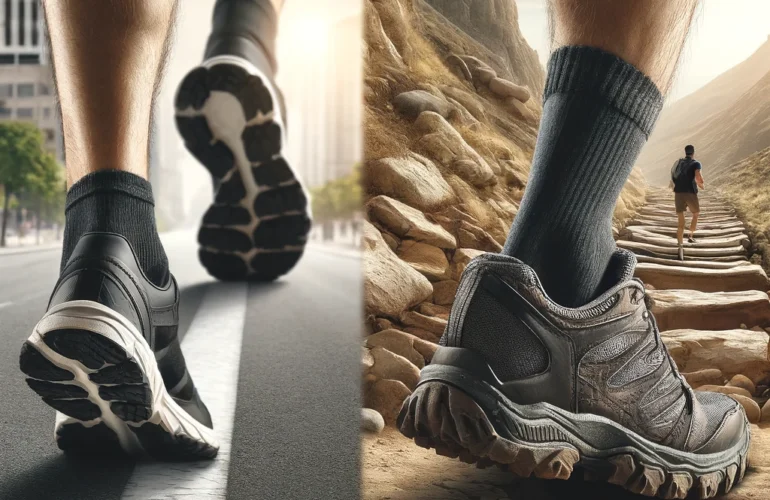
When it comes to running, having the proper pair of shoes can really improve how you perform and how comfortable you feel and help prevent injuries. But choosing the perfect footwear goes beyond just picking your size and favorite color. One of the key factors to consider is the terrain you plan to run on—whether you’re pounding the pavement or exploring rugged trails. Explore the differences between road and trail running shoes and why choosing the right pair based on terrain is crucial.
Road Running Shoes
Road running shoes are developed for smooth, hard surfaces like sidewalks, asphalt, and tracks. Here are some of the key features that set them apart:

- Lightweight Construction: Road running shoes are typically lightweight, allowing faster movement and less resistance. The lightweight design ensures that runners can maintain a steady pace without feeling weighed down.
- Flexibility and Cushioning: These shoes are made to be flexible and provide plenty of cushioning to absorb the shock from walking or running on hard surfaces. The cushioning provides comfort during long runs and helps protect your joints from stress.
- Smooth Soles: The soles of road shoes are relatively smooth, with shallow grooves that offer grip on flat surfaces. The focus is on providing traction on slick surfaces like wet roads rather than dealing with rugged terrain.
- Breathable Materials: Road shoes usually feature breathable mesh uppers to cool your feet during long runs. Since road running is typically done in warmer conditions, breathability becomes important.
- Durability on Pavement: These shoes are built to withstand the wear and tear of asphalt and concrete, meaning they have tougher materials in the soles. Still, they are not intended for off-road adventures where sharp rocks or muddy conditions prevail.
Read more Run Wild, Run Free: Exploring the Beauty of Trail Running.
Trail Running Shoes
Trail running shoes are designed for uneven, rocky, and unpredictable surfaces. Whether you’re tackling dirt paths, gravel, or steep inclines, trail shoes are built to provide stability, protection, and grip. Here’s what makes them different:

- Enhanced Grip and Traction: The biggest distinguishing feature of trail shoes is their aggressive outsoles, which are equipped with deep lugs or treads. These features provide better grip and traction on slippery, muddy, or uneven terrain, ensuring you stay upright on challenging trails.
- Increased Protection: Trail shoes often have reinforced toe caps and thicker materials to protect your feet from sharp rocks, roots, and debris. Many also come with rock plates embedded in the midsole to shield the bottom of your feet from sharp objects on the trail.
- Stability and Support: When you run on rough or bumpy ground, you need shoes that provide good support and stability. Trail shoes are made specifically for this, giving extra support to your ankles and helping you stay steady. The stiff construction of these shoes helps prevent ankle rolls and falls on rocky or hilly trails.
- Water-resistant and Durable Materials: Trail shoes are made of special materials that resist water, keeping feet dry when running through water, mud, or wet grass. The durable construction can also handle the tough environments you’ll encounter in the great outdoors.
- Heavier Build: Because they’re designed to offer more protection and stability, trail shoes are generally heavier than road shoes. The trade-off is worth it if you need extra support for rugged terrains.
Key Differences to Consider
- Terrain: If you’re running on smooth, paved roads, road running shoes are your best bet. They’re lightweight, cushioned, and flexible. On the other hand, if your runs take you off the beaten path, trail running shoes provide the necessary grip, protection, and stability for uneven surfaces.
- Grip: Road shoes have less aggressive treads than trail shoes. But they are designed to offer superior traction on loose or muddy ground.
- Protection: Trail running shoes offer more foot protection with reinforced materials, while road running shoes prioritize cushioning and flexibility.
- Weight: Road shoes are lighter for faster running on flat surfaces. Trail shoes are heavier due to the added features needed for off-road safety.
Choosing the right shoes for your run depends entirely on the terrain you plan to tackle. Road running shoes are perfect for smooth surfaces where speed and cushioning matter most, while trail running shoes are essential for those who prefer rugged trails and need added grip, protection, and stability. Before hitting the road or the trail, consider your environment. Also, select footwear to help you stay comfortable, safe, and efficient throughout your run.